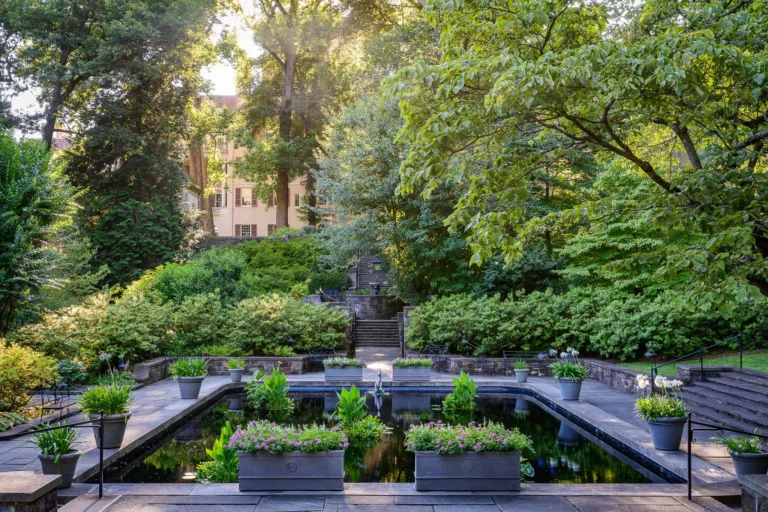
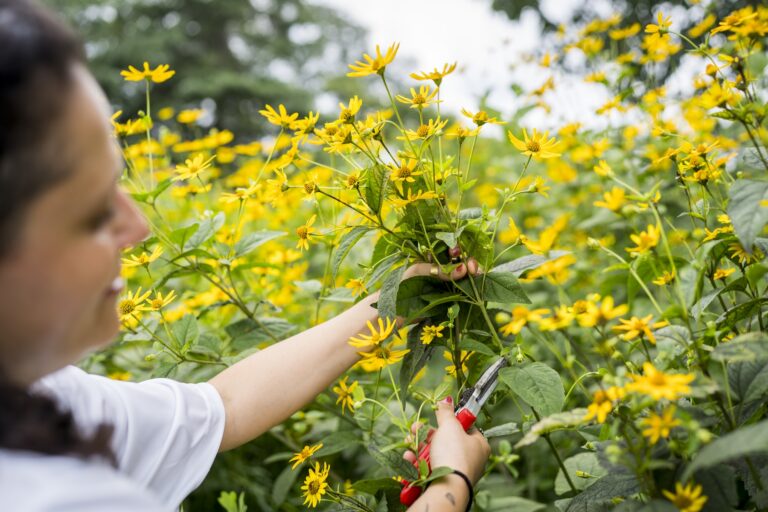
As the United States approaches its 250th anniversary, Seeds of a Nation invites us to look beyond monuments and into the landscapes that helped shape the country itself. Few places embody that story more powerfully than Bartram’s Garden—the oldest public garden in America—where science, exploration, and a deep curiosity about the natural world helped lay the foundation for American horticulture.
This remarkable site reveals how the nation’s botanical legacy is still being uncovered—sometimes quite literally—from the ground beneath our feet.
Where American Horticulture Took Root
Founded in 1728 by John Bartram, Bartram’s Garden began as a working farm along the Schuylkill River and evolved into a center of botanical discovery. As a self-taught botanist, Bartram cultivated one of the earliest collections of North American plants, gathered through expeditions across the colonies and shared with an international network of scientists and gardeners.
His work—continued by his son, William Bartram—helped establish Philadelphia as a hub of early horticultural exchange. Today, that legacy lives on in a landscape that has been continuously cultivated for nearly 300 years.

Unearthing the Past—One Seed at a Time
What makes Bartram’s Garden especially compelling today is not just its age, but the way its history continues to be discovered.
As highlighted in Unearthing Horticultural History, archaeological and botanical research has revealed how even the smallest remnants—seeds, plant fragments, and soil evidence—can offer insight into what was grown, traded, and valued centuries ago.
In one fascinating discovery, preserved seeds found beneath the floorboards of the Bartram house—likely collected by rodents nearly 200 years ago—provided new clues about the diversity of plants once cultivated on the property. These findings transform the garden into more than a historic site; it becomes an active research landscape, where science continues to deepen our understanding of early American life.
A Landscape Shaped Over Millennia
Long before Bartram’s Garden was established, this land held significance for Indigenous peoples, who relied on the river and surrounding wetlands for food and resources for thousands of years.
This layered history—Indigenous land use, colonial farming, scientific exploration, and modern preservation—makes the garden a powerful reflection of how landscapes evolve alongside human history.

From Global Exchange to Local Connection
By the mid-18th century, Bartram’s Garden had become a center of international plant exchange, with thousands of species cultivated and shared across the Atlantic.
Today, that legacy continues in a different form. The garden serves as a public green space, community resource, and outdoor classroom—connecting visitors not just to plants, but to the cultural and environmental history of Philadelphia.
You can still encounter living descendants of historic plantings, making this not a recreated garden, but a continuous one—rooted in the past and growing into the future.

Why Visit Bartram’s Garden Today?
Bartram’s Garden captures the essence of Seeds of a Nation: a place where the story of America is rooted in the land itself.
Here, you can:
- Visit the oldest public garden in the United States
- Walk through a landscape shaped by centuries of exploration and stewardship
- Discover how ongoing research continues to uncover hidden layers of history
- Experience a living environment that evolves with the seasons
Plan Your Visit
In many historic places, the past feels distant. At Bartram’s Garden, it feels immediate—embedded in the soil, the trees, and even the seeds waiting to be discovered.
As we reflect on 250 years of American history, Bartram’s Garden reminds us that the nation’s story isn’t just written in documents—it’s grown, cultivated, and continuously unearthed in the landscapes around us.